
Racking selection often begins with the wrong question. Operators ask “what racking should I install?” when the more useful question is “how quickly does my inventory move?” — because how frequently a pallet is picked and replaced determines which racking format actually delivers value, and which one quietly becomes a bottleneck. High-turnover inventory in dense drive-in racking creates constant retrieval friction. Low-turnover inventory in prime selective racking wastes valuable floor space. Both situations are common, and both trace back to selecting racking without reference to actual turnover data.
This guide explains how to translate inventory turnover data into racking selection decisions, so operators planning a new warehouse or reviewing an existing one can identify which formats match their inventory’s actual movement patterns.
What Is Inventory Turnover, and Why It Drives Racking Selection
Inventory turnover — sometimes called stock turn, inventory turns, or inventory turnover ratio — measures how many times inventory is sold and replaced within a given period, usually a year. The basic calculation is straightforward:
Inventory Turnover = Cost of Goods Sold (COGS) ÷ Average Inventory Value

An operation with $10 million in annual COGS and $2 million in average inventory has a turnover of 5, meaning inventory cycles through the warehouse five times per year on average. Higher turnover indicates faster-moving inventory; lower turnover indicates slower-moving stock.
Why this matters for racking: Every racking format represents a specific tradeoff between storage density and retrieval speed. High-turnover inventory needs to be retrieved constantly, so density gains that compromise access speed become net losses in operational efficiency. Low-turnover inventory sits in place for extended periods, so retrieval speed matters less, and density gains directly reduce the floor space cost of holding that inventory.
Selecting racking without reference to turnover data means guessing at where inventory falls on this tradeoff — and often getting it wrong. Facilities that match racking format to turnover velocity consistently outperform those that don’t, both in throughput and in cost per pallet position stored.
Current Challenges in Turnover-Based Racking Decisions
Warehouses treat all inventory as if it has the same turnover. A single racking format applied to all SKUs assumes uniform movement patterns, when actual inventory almost always splits into distinct velocity groups.
Turnover data isn’t broken down by SKU or category. Operations may know the facility’s overall turnover ratio without knowing how it varies between fast-moving core SKUs and slow-moving reserve stock — which is exactly the breakdown needed for racking selection.
Selection defaults to what a peer facility uses. Racking decisions often follow industry norms rather than the specific operation’s actual data, which produces mismatched configurations when turnover characteristics differ from the peer average.
Historical inventory patterns get treated as permanent. SKU velocity shifts over time as product mix, seasonality, and market conditions change. Racking installed for one turnover profile may not match the operation five years later, but layouts are rarely reviewed against updated turnover data.
Cost analysis focuses on racking price, not throughput. Cheaper racking that slows retrieval on high-turnover SKUs often costs more in labor and delayed orders than the price difference saves, but this tradeoff is difficult to see without turnover-based analysis.
How Turnover Maps to Racking Format Selection
The core principle: as turnover velocity increases, the value of retrieval speed rises and the value of density decreases. As turnover velocity decreases, the opposite applies. Different racking formats sit at different points on this tradeoff curve.
Very high turnover (10+ turns per year). Extremely fast-moving inventory — daily-cycled consumer goods, e-commerce fulfillment core SKUs, essential FMCG — needs formats that prioritize retrieval speed above all else. Selective pallet racking with wide aisles and standard reach truck access provides the fastest per-pallet retrieval and works well for these SKUs. Pick modules and carton flow systems suit high-turnover small-item picking. Density-focused formats such as drive-in racking are generally poor fits for very high turnover, since the retrieval friction outweighs the density gain.
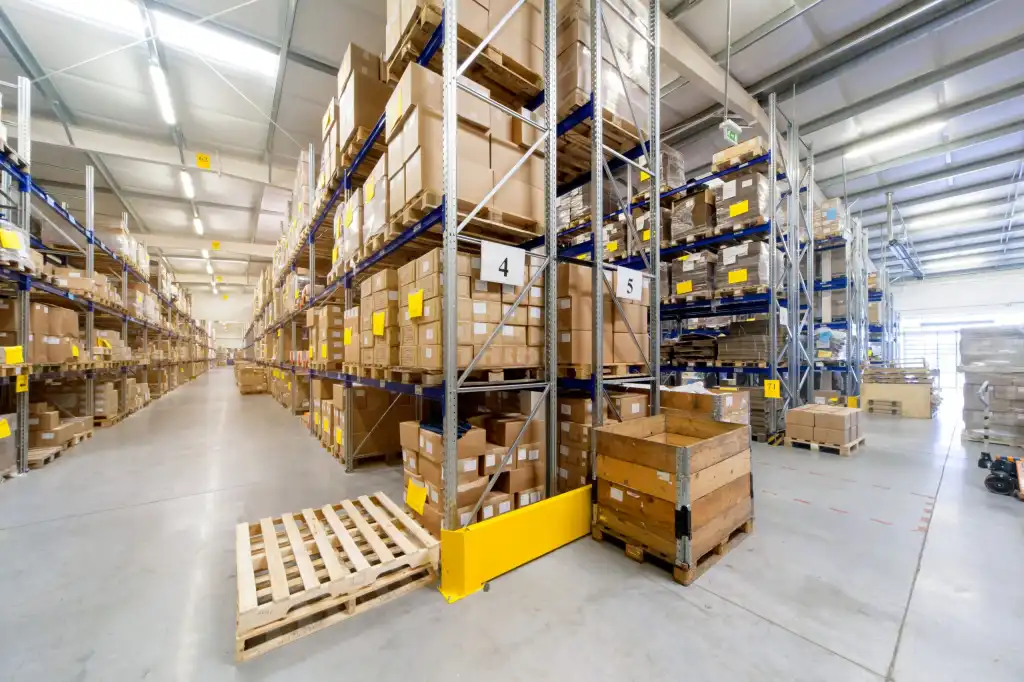
High turnover (6 to 10 turns per year). Fast-moving inventory still benefits primarily from selectivity and access speed. Selective pallet racking remains a strong default. VNA (very narrow aisle) configurations can work here, providing higher density while retaining per-pallet access, though the reduced forklift movement speed of VNA versus standard aisles should be evaluated against actual pick rates.
Moderate turnover (3 to 6 turns per year). Mid-velocity inventory sits in the transition zone where format choice depends more on specific SKU characteristics. Selective racking works well when SKU variety is high; double deep racking can add density without significantly compromising throughput when consecutive same-SKU picks are common. This is often the largest inventory category in a general warehouse, and often benefits from being segmented further by specific SKU velocity within the moderate band.
Low turnover (1 to 3 turns per year). Slower-moving inventory can tolerate density-focused formats since individual pallets are retrieved infrequently. Drive-in and drive-through pallet racking works well here for bulk homogeneous SKUs, achieving significantly higher density than selective racking. Push-back racking suits moderate-selectivity applications with 2 to 5 pallets per SKU. Radio shuttle racking can provide even higher density with better rotation control.
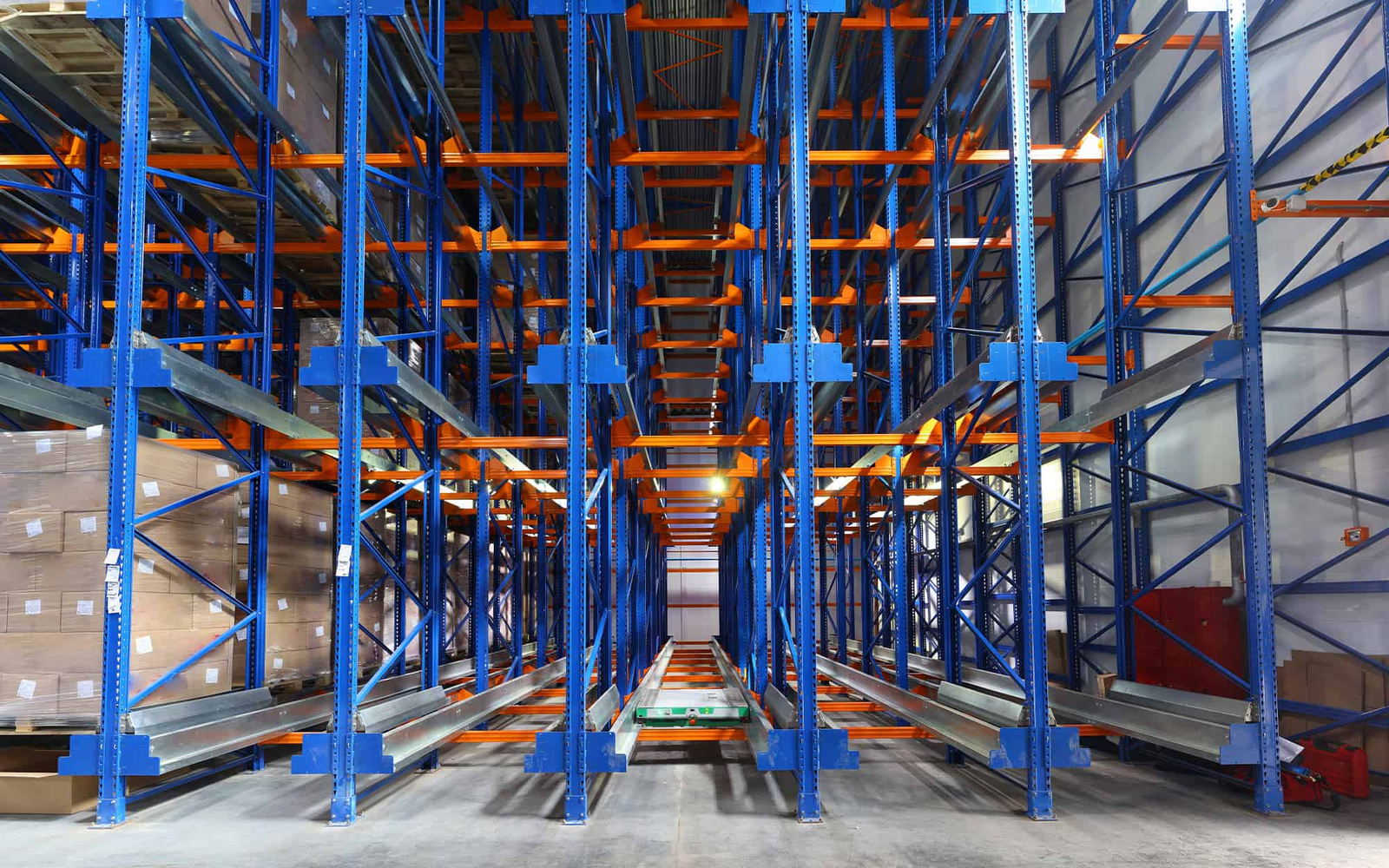
Very low turnover (under 1 turn per year). Reserve stock, seasonal inventory, and archived materials that sit for extended periods can occupy the highest-density formats without operational penalty. Drive-in racking with deep lanes, or mobile pallet racking where floor space cost is high, both deliver maximum density for inventory that rarely moves.
Highly variable turnover (mixed velocity in same operation). Most real warehouses have a mix of turnover velocities across different SKUs. The right approach is generally not to compromise on a single format, but to zone the facility by turnover velocity and apply different formats to each zone — fast movers get selective, slow movers get high-density, medium movers get formats matched to their specific characteristics.
